Still Waters of the North: An Archipelago Sanctuary in Lofoten
A coastal study of sub-arctic tranquility, restored rorbuer cabins, and respectful maritime exploration.
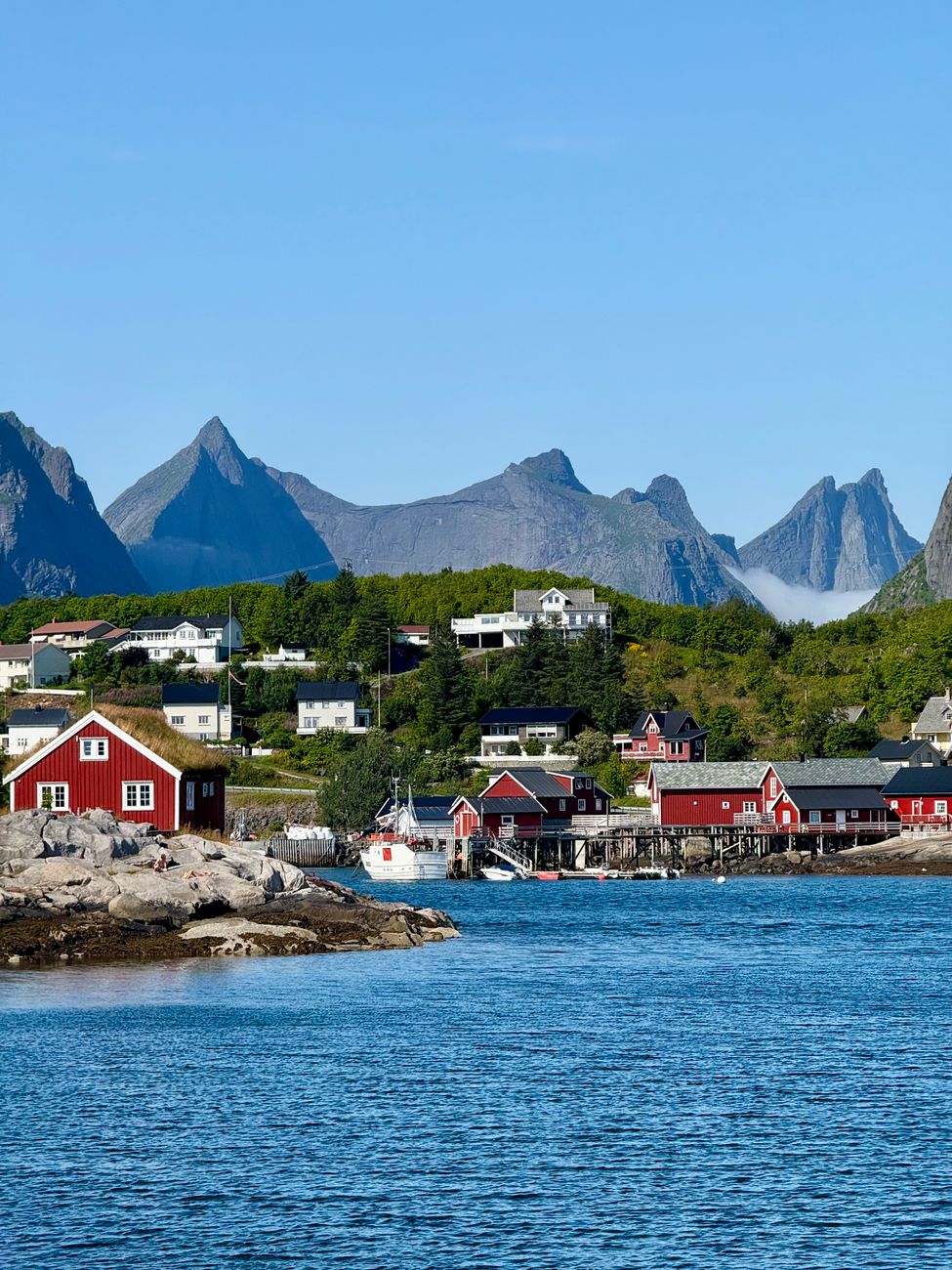
Table of Contents
1. The Wall of Lofoten
Approaching the Lofoten archipelago from the Vestfjorden by ferry, the mountains rise like dark cathedral spires straight out of the Norwegian Sea. This dramatic granite barricade protects secluded fishing outposts from the fierce Arctic ocean swell. Here, human settlement has existed since the Viking age, defined by an unspoken contract with the elements.
In Reine and Henningsvær, the salt-crusted air carries the scent of Arctic cod and dried pine. In winter, the sun barely crests the horizon, bathing the islands in five hours of perpetual twilight, known locally as the blue hour.
2. Architecture of Survival: The Rorbu
The iconic red and ochre wooden cabins built on stilts over the tidal shallows—known as rorbuer—were originally constructed to house seasonal fishermen who gathered for the great winter cod runs. Today, thoughtful restoration projects have converted many into quiet, unpretentious sanctuaries for artists and writers.
"The sea does not belong to humanity here; we are simply guests sleeping above the tide."
Inside, cast-iron wood stoves crackle against coastal blizzards, while minimalist Nordic furniture celebrates pale birch, sheepskin throws, and expansive picture windows oriented toward the fjord.
3. Polar Night & Luminescence
Between November and February, darkness is not an absence of light, but a canvas for subtle luminescence. The Aurora Borealis sweeps overhead in ribbons of cold emerald and violet, reflected perfectly in the mirror-like fjord waters beneath.
4. Sustainable Arctic Travel
Transit: Utilize electric vehicle rentals or the public Hurtigruten ferry rather than flying between island airstrips.
Community: Purchase stockfish and knitwear directly from local family cooperatives in Å and Reine.
Conservation: Avoid camping on fragile coastal tundra moss, which requires decades to regenerate.